3 hours ago
Kristen Stewart Says She’d “Love” to Direct a Queer‑Positive Twilight Reboot, Sparking Sapphic Fan Hopes
READ TIME: 3 MIN.
Kristen Stewart has said she would “love” to direct a new adaptation of the Twilight saga, prompting a wave of queer fan speculation about how a reboot could reimagine the vampire romance through a more explicitly LGBTQ+ lens.
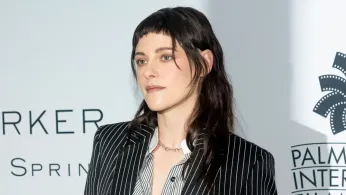
Speaking to Entertainment Tonight on the red carpet at the Palm Springs International Film Festival, Stewart was asked whether there was a past project she would like to revisit as a filmmaker, with the interviewer suggesting The Twilight Saga. Stewart replied that she could imagine returning to the material if she were in the director’s chair.
“Imagine if we had like a huge budget and a bunch of love and support? I would love to readapt, ” she said, before adding, “Yeah, sure, I’ll do the remake. I’m doing it. I’m committed. ” Coverage in outlets including PinkNews and Out Magazine noted that her tone appeared at least partly tongue‑in‑cheek, but the remarks were clear enough to ignite fandom discussion about what a Stewart‑helmed Twilight could look like.
LGBTQ+ media have emphasized that Stewart’s comments land in a context where she has openly described the original films as marked by queer energy and subtext. In a 2025 Variety cover interview, cited by DIVA Magazine and AOL, Stewart reflected that “It’s such a gay movie, ” pointing to the intensity, repression and desire at the heart of the series. She linked this feeling to the story’s Gothic themes and to her own experience living more authentically as a bisexual woman in the years since the films were released.
Although no reboot has been announced by the rights‑holders or by Stewart’s team, queer audiences quickly seized on the idea on social media, particularly the possibility of a sapphic twist. PinkNews reported fans on X, formerly Twitter, imagining “a lesbian vampiric drama” and explicitly calling for a version where Bella is queer. DIVA Magazine similarly highlighted long‑standing fan interest in pairing Bella Swan with Alice Cullen, Edward’s vampire sister, as a popular queer “ship” that could be explored more openly in a reboot.
Other viewers expressed skepticism about the likelihood or desirability of a remake, joking online that Stewart might not be serious or arguing that they would only support a reboot if it improved the acting and foregrounded queer storylines. This mixture of enthusiasm and caution reflects Twilight’s complicated place in both mainstream and LGBTQ+ culture: commercially dominant, often critically derided, but deeply significant to many queer fans who saw themselves in its themes of forbidden love and otherness.
Stewart’s openness to returning as a director comes as she is promoting her feature directorial debut, The Chronology of Water, adapted from Lidia Yuknavitch’s memoir and already drawing attention on the festival circuit. DIVA Magazine reports that the film is due to reach United Kingdom cinemas in early February, with critics positioning Stewart as a filmmaker to watch.
Beyond her Twilight legacy, Stewart has built a career that includes both mainstream blockbusters and independent, often queer‑inclusive projects. She received an Academy Award nomination for portraying Princess Diana in Spencer and has starred in the lesbian crime‑tinged thriller Love Lies Bleeding, among other projects. PinkNews notes that Stewart, who is bisexual, is dating screenwriter Dylan Meyer, and has spoken publicly about resisting the idea that queer creatives should only make explicitly “queer” films.
In discussing Love Lies Bleeding, Stewart argued that queer people “have been there the whole time” in cinema and suggested that the era of queer films being required to center only identity‑focused narratives is “over, ” a stance widely reported by LGBTQ+ outlets. Her Twilight reboot comments sit alongside that view: rather than promising any specific storyline, she signals an interest in revisiting familiar material from a place of creative control, greater resources and a more out‑and‑proud standpoint.
For many LGBTQ+ viewers, the prospect of Stewart behind the camera on Twilight is less about a confirmed project and more about what it represents: the possibility that a franchise long embraced by queer fans might one day be reshaped by a queer filmmaker who understands why those audiences saw themselves there in the first place.